
Communication is one of the most important aspects when it comes to the success of your thesis. The exchange between you and your supervisor significantly influences how well your work turns out and whether you can achieve your set goals. In this guide, we will show you how to optimize communication with your supervisor to get the most out of your collaboration.
The video is only loaded from YouTube when you play it – data (including your IP address) is then transmitted to YouTube/Google. More in the privacy policy
Key Insights
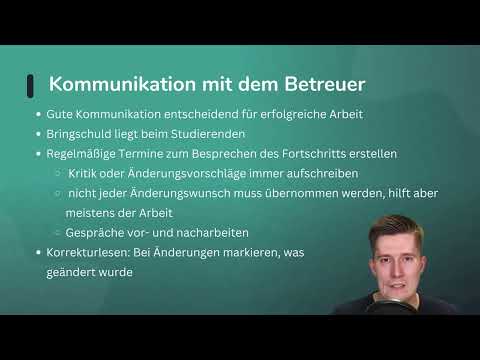
- The responsibility for communication lies with the student.
- Regular meetings are crucial for discussing progress.
- Critical feedback from the supervisor should be taken seriously and documented.
- Changes to the text should be clearly indicated to facilitate the supervisor's work.
Step-by-Step Guide
The first step to a successful collaboration with your supervisor is understanding that the responsibility always lies with the student. Therefore, you must actively communicate and request support. It is not your supervisor's responsibility to ensure you are on the right track. This fundamental understanding is crucial for productive collaboration.
To avoid misunderstandings or development issues in your work, it is advisable to schedule regular meetings for discussions. Whether weekly or biweekly, these meetings are an excellent opportunity to present your progress and ensure that you meet your supervisor's expectations and guidelines.

During these meetings, your supervisor will typically provide you with feedback. Criticism and suggestions for changes should always be documented by you. It shows your supervisor that you take their advice seriously and are willing to develop further. Use a notebook or digital tools to record important points.
Be aware that your supervisor is not personally against you but is trying to help you. The comments you receive are improvement suggestions aimed at enhancing your grade. If you disagree with certain suggestions, you have the right to reconsider and reject them, as long as you can justify your reasoning.
Another important point is to prepare for and follow up on your discussions. Write down the topics and questions you want to discuss before the meeting to ensure you don’t forget anything. After the discussion, you should incorporate the comments and suggestions received into your work. This ensures that you continuously make progress.
It is helpful if your supervisor reads your work before submission. Clearly and neatly mark all changes you have made. This makes their job easier and shows that you have implemented their suggestions while also being respectful of their time.
If you follow these steps, you will make it easier for your supervisor to assist you with your work. This can positively impact not only your grades but also the overall atmosphere between you and your supervisor.
Summary – Communication with Your Supervisor as Key to Success
An open and regular communication is essential to avoid misunderstandings and ensure that you are on the right track. Actively use the meetings, document feedback, and show your supervisor that you are working on your project. This will not only improve your grades but also facilitate the entire process of writing your thesis.
FAQ
How often should I contact my supervisor?The frequency depends on your progress; weekly or biweekly meetings are sensible.
What should I bring to the meetings?A note where you record questions and important points is essential.
How do I handle criticism?Take the suggestions seriously, document them, and consider how you can implement them.
Do I have to implement every suggestion from the supervisor?You do not have to accept every suggestion, but you should seriously consider them.
How do I mark changes in my document?Clearly mark all changes made so the supervisor can quickly get an overview.

