Job & Career
Digital education in Germany: Is more awareness of user behavior necessary?


Contents 9 sections
- From illusion to reality: What routine really means
- ICILS 2023: When young people do not master digital basics
- Smartphones and school: The debate about bans and opportunities
- Digital risks: Phishing as a mass phenomenon
- The digital divide is deepening
- Adults as the forgotten target group
- Awareness-raising as the key to autonomy
- Sustainability begins with conscious consumption
- What needs to change: An outlook
How are your media skills, actually? Are you someone who mainly uses your smartphone for gaming and chatting, or are you one of those people who are seen as the walking tech support by family and friends? The honest answer to this question reveals more about the actual state of digital education in Germany than any statistic. Because between routine tapping and real understanding of digital processes lies a gap that we have ignored for far too long.
Digital education in this country is often defined by equipment, programs, and strategy papers. Between 2019 and 2024, the Digitalpakt Schule provided a total of 6.5 billion euros for technical infrastructure. Tablets were purchased, Wi-Fi networks expanded, interactive whiteboards installed. But in everyday life, something else determines competence, namely routines, habits, and an understanding of what actually happens behind the scenes of digital processes. Anyone who clicks with confidence does not automatically act with confidence. This is where a debate about user behavior begins, one that has been conducted too quietly for too long.
From illusion to reality: What routine really means
Many digital processes work smoothly as long as they are familiar. Online banking, appointment bookings, or messenger apps have long been part of normal life and convey a deceptive sense of control. However, this feeling is often based on habit rather than real understanding. A representative Bitkom study from June 2024 clearly shows the problem: while 85 percent of Germans say that digital technologies make their lives directly easier, 41 percent at the same time often feel overwhelmed by digitalization. This contradiction runs through all age groups, as even a third of 30- to 49-year-olds report regularly feeling overwhelmed.
Another figure from the same survey is particularly revealing: 44 percent of respondents are afraid of not being able to keep up with technological development. This concern is not a phenomenon of old age; it affects people in the middle of their working lives just as much as retirees. The Bitkom study on digital participation thus documents a collective insecurity that is simmering behind the fa??ade of supposed normality.
Terms of use are accepted, data is shared, and recommendations are adopted without questioning their logic. This form of convenience is not an individual failure, but the result of a lack of awareness-raising. For years, digital education has relied heavily on application, while reflection often came afterwards. This creates a routine that works in everyday life but quickly reaches its limits when problems arise.
ICILS 2023: When young people do not master digital basics
The international comparative study ICILS 2023 presented sobering results for Germany in November 2024. Despite massive investments in technical equipment, 40 percent of eighth graders achieve only rudimentary digital skills. These young people can perform basic tasks on the computer, but fail at critically evaluating information or independently solving problems in the digital space.
Education researcher Birgit Eickelmann of Paderborn University, who leads the study in Germany, gets to the heart of the dilemma. The improved equipment has not automatically led to better skills. On the contrary: compared to the surveys of 2013 and 2018, there is a clear decline in competence. The Deutsches Schulportal quotes Eickelmann as assessing that the dependence of skills on social background remains strongly pronounced.
One statistical value illustrates the situation particularly vividly: in Germany, an average of about four students still share one school device. Behind this figure lies the reality that three out of four young people go empty-handed or have to resort to devices financed in other ways. The JFF expertise on adult media literacy emphasizes in this context that lifelong learning in the digital area is indispensable but rarely systematically promoted.
Smartphones and school: The debate about bans and opportunities
The discussion about mobile phone use at schools intensified significantly in 2024 and 2025. According to PISA data, 16- to 18-year-olds in Germany spend an average of 38.7 hours per week on their smartphones, which corresponds to over five hours a day. The JIM study 2025 arrives at comparable results for young people between 12 and 19 years old, who spend almost four hours a day on their phones. A study by the American non-profit organization Common Sense Media also shows that half of 11- to 17-year-olds receive at least 237 notifications per day, with about a quarter of these messages arriving during school hours.
The PISA study 2022 provides revealing insights into the distraction potential of smartphones. One in three young people says they become nervous when their phone is not within reach. Among girls, it is even 40 percent. About one in four feels pressure to reply to messages during lessons. The Deutsches Schulportal has summarized the most important findings and shows that students who always turn off their notifications during lessons score on average 19 PISA points higher than the average.
| Aspect | Statistical finding | Source |
| Smartphone use (ages 16-18) | 38.7 hours/week | Postbank Youth Digital Study 2024 |
| Daily notifications | 237+ (median, ages 11-17) | Common Sense Media 2024 |
| Nervousness without phone | 33% (girls: 40%) | PISA 2022 |
| Pressure to respond in class | 25% | PISA 2022 |
| Risky social media use | 24.5% (ages 10-17) | DAK/UKE 2024 |
The Leopoldina, the national academy of sciences, spoke out in August 2025 in favor of a mobile phone ban up to grade 10. The scientists advocate a course of caution as long as the question of a causal link between social media use and mental health has not been conclusively resolved. Several federal states have meanwhile introduced different regulations, with Baden-W??rttemberg leading nationwide with 66.9 points in the degree of digitalization in education.
Digital risks: Phishing as a mass phenomenon
Unreflective user behavior does not remain without consequences. The Kaspersky Spam and Phishing Report for 2024 documents around 37.5 million phishing attempts in Germany alone, an increase of about 16 percent compared to the previous year. In addition, 2.6 million malicious email attachments were registered. Worldwide, the number of phishing attacks rose by 26 percent from 710 million in 2023 to 893 million incidents.

The Federal Office for Information Security (BSI) confirms in its 2024 review of digital consumer protection that phishing and data leaks represent the biggest digital threats to consumers. BSI President Claudia Plattner points out that password-based authentication methods are not sufficiently resistant to these attacks. The BSI therefore urgently recommends the use of two-factor authentication and, in the long term, the switch to passkeys.
Cybercriminals increasingly exploit current trends for their attacks. In 2024, crypto and AI trends as well as well-known platforms such as Booking, Airbnb, TikTok, and Telegram were particularly often misused as bait. The Bitkom Economic Protection Study 2024 puts the total damage caused by data theft, sabotage, and industrial espionage at 266.6 billion euros, with cyberattacks responsible for two thirds of this damage. 81 percent of all German companies were affected by digital or analog attacks in the past twelve months.
The digital divide is deepening
The gap between digital ability and inability continues to deepen. According to the Bitkom survey, 63 percent of Germans perceive a digital divide in Germany, a share that has increased slightly compared to previous years. This divide runs along several lines: socioeconomic status, level of education, age, and geographic location all play a role.
The ICILS study underlines that the dependence of digital skills on social background is particularly pronounced. Children from households distant from education have significantly worse chances of developing solid digital skills. They less often get access to school devices and benefit less from extracurricular learning opportunities.
Dealings with authorities, job applications, and further training are increasingly moving online, meaning uncertainty quickly leads to exclusion. Digital education thus decides not only about security, but also about independence, orientation, and social participation. Those who lose touch risk social decline in a digitalized working world.
The 2024 Further Education Study by the Bitkom Akademie shows that the need for AI and digital skills in companies is rising massively. 87 percent of respondents consider it important to have time for targeted further training alongside their core tasks. At the same time, 59 percent of employees prefer individualized learning formats tailored to their needs.
Adults as the forgotten target group
The video is only loaded from YouTube when you play it – data (including your IP address) is then transmitted to YouTube/Google. More in the privacy policy
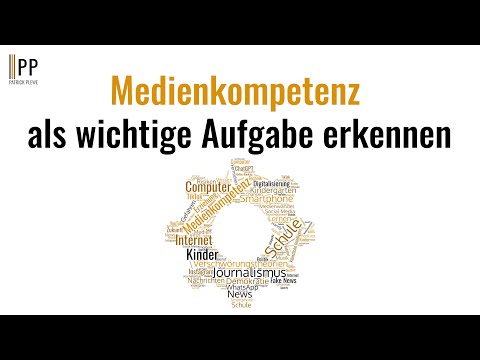
The expertise of the JFF (Institute for Media Education) on adult media literacy reveals a structural weakness in the German education landscape. For a long time, adults were regarded primarily as potential transmitters of media literacy and less as addressees who have to acquire media skills themselves. Yet there is hardly any area that makes lifelong learning as necessary as the handling of digital media and the reflection on one's own media behavior.
The expert reports show that in the training of early childhood educators, teachers, adult educators, and social pedagogues, the teaching of media education skills is not always a matter of course or sufficiently present. Demands to bindingly anchor basic media education in many educational and work areas are currently in vogue, but are in fact not implemented across the board in programs, training and studies, and further education offerings.
A central finding from the analyses of existing studies is that the various areas of adults' lives are rarely linked to one another. Outreach is mostly role-specific, even though an employee who is confronted with specific professional requirements also acquires media literacy in the private sphere. Here, a comprehensive perspective would be desirable, one that can meaningfully connect different areas of life.
Awareness-raising as the key to autonomy
Digital education only unfolds its full effect when it consciously takes user behavior into account. This includes critical media literacy as well as a basic understanding of algorithms and AI systems that influence visibility and decisions. Those who know that content does not appear by chance begin to evaluate digital offerings differently and make considered decisions.
The Bitkom study on digital participation shows that 49 percent of Germans would like to learn more about artificial intelligence. 44 percent already say that AI makes their everyday life easier today. 57 percent believe all people should have the opportunity to become familiar with AI. This interest offers enormous potential for educational initiatives, but it must be used systematically.
Katharina Scheiter, Professor of Digital Education at the University of Potsdam, emphasizes in conversation with the Deutsches Schulportal that what matters is practicing appropriate use with children and young people. It does no good if children compulsively suppress the urge to reach for their phone all morning and then compensate by playing with it uncontrollably in the afternoon. The central question is: What role does the phone play for me? Educators must give children strategies for dealing with such situations.
Sustainability begins with conscious consumption
The video is only loaded from YouTube when you play it – data (including your IP address) is then transmitted to YouTube/Google. More in the privacy policy
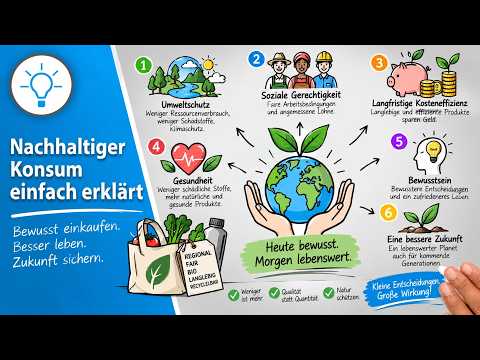
Awareness-raising also means taking responsibility for one's own digital actions instead of viewing technology as a neutral black box. In addition, sustainable aspects play a growing role, for example in the handling of hardware. Those who understand how quickly resources are consumed recognize the value of refurbished devices as a sensible alternative to constantly buying new ones.
An example: instead of buying a new smartphone with every model change, opting for a refurbished iPhone 17 can be a conscious decision for more sustainability. Platforms like Back Market have made this approach visible and show that technological progress and conscious consumption are not a contradiction. The decision for reconditioned technology saves resources, reduces electronic waste, and spares your wallet, without having to give up current functionality.
This form of conscious consumption is also part of digital education. Those who understand the production cycles of electronics, who know under what conditions rare earths are mined and how short the average usage period of smartphones is, make more informed purchasing decisions. Awareness-raising combines technical understanding, responsibility, and foresight into an overall picture that makes digital education sustainable in the long term.
What needs to change: An outlook
The video is only loaded from YouTube when you play it – data (including your IP address) is then transmitted to YouTube/Google. More in the privacy policy
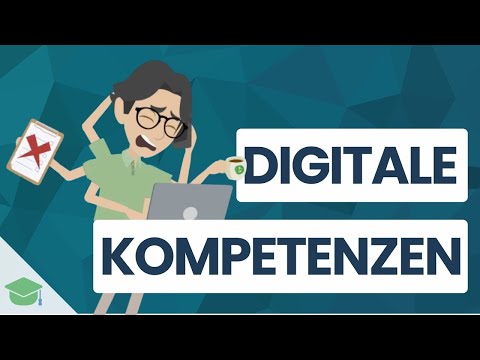
The discrepancy between smartphone ownership and digital skills clearly shows that the education system is no longer fully living up to its mission of preparing children and young people for life and the working world. The technical equipment has improved, but it must now be used in such a way that children and young people learn to handle digital media and information competently and reflectively.
Checklist for more digital competence:
☐ Actually read the terms of use of apps and services instead of blindly accepting them
☐ Activate two-factor authentication for all important accounts
☐ Know the characteristics of phishing and critically examine suspicious emails
☐ Regularly use different, secure passwords for different services
☐ Consciously reflect on screen time and reduce it if necessary
☐ Question the algorithms that curate content
☐ Systematically verify the sources of online information
☐ When buying hardware, consider sustainable options such as refurbished devices
The Standing Conference of the Ministers of Education and Cultural Affairs recently published recommendations on artificial intelligence. The Digitalpakt 2.0 is intended to continue the funding of school digitalization. According to Bitkom, 93 percent of teachers demand that this follow-up program must also include funds for licenses, teaching materials, and training that have not been taken into account so far.
Especially in times when disinformation and fake news pose an ever greater challenge, digital skills are crucial for the resilience of our society. The ICILS study shows that a modern education system needs, in addition to technical equipment, appropriate training for teachers, licenses for tools, and strategies at schools. Simply providing devices is not enough. Only through intensive and continued application of best practices do habits and changes in established behaviors emerge.
In the end, there is the question that everyone must answer for themselves: Are you ready to go from passive consumer to autonomous user? The technical possibilities have never been greater. What is often missing is only the willingness to engage with what really happens behind the shiny surfaces of our devices.
Reading tip: Why is the SCORM format the key to professional e-learning?
Comments
Register and comment.
Continue reading


