
Children marvel at the strange musical instruments of the indigenous people – Free coloring template of the discovery of America
In the coloring picture, you see curious children observing strange musical instruments of the indigenous people. The scene takes place during the time of the discovery of America and is ideal for printing and coloring. You can see in detail drums, flutes, and rattles made of wood and stone – perfect for creative color experiments. You can download the high-quality JPG coloring template for free without registration. Alternatively, the template is available online for coloring in your browser. Get the picture now and start right away!

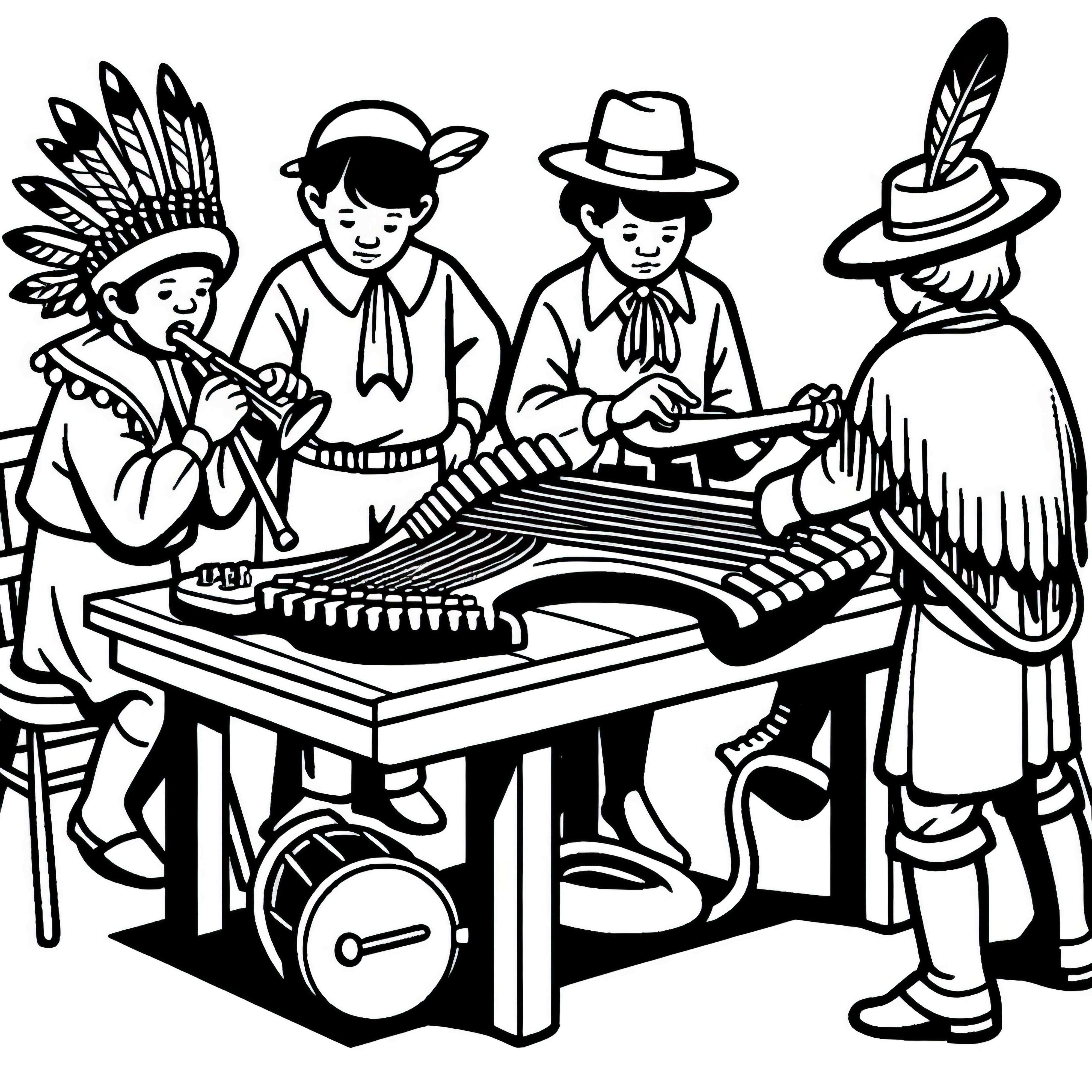
Children admire strange musical instruments – Free coloring template
- The picture shows children admiring strange musical instruments of the indigenous population during the discovery of America.
- You can download the coloring template for free, without registration.
- The high-quality JPG file offers fine outlines and optimal print quality.
- Ideal for printing, coloring at home or in school as creative learning material.
- Would you rather work digitally? Then color the picture directly online!
In the 15th century, European explorers first encountered different cultures in Central and South America. Musical instruments played a central role in many indigenous societies – they accompanied rituals, celebrations, or storytelling. Drums made from animal skins produced deep, rhythmic sounds, while flutes made from reeds or bones created high tones. Rattles made from seed pods and shells reinforced the beat and often served as signaling devices. Each instrument was handcrafted and reflected the close connection to nature: wood from sacred trees, colorful feathers, or painted stones showed cultural identity.
In your coloring picture, you can explore all these details: design drum skins with earthy tones, adorn flutes with patterns, and give the rattles bold color accents. This way, you not only get a colorful picture but also a piece of cultural history. After coloring, you have a vivid example of music in the daily life of indigenous peoples for art class or at home.
Do you want to try more motifs about the discovery of America? Check out more coloring pictures about the discovery of America and find exciting scenes from this time.
Creative burst of colors for historical instruments
In the coloring template, children admire various instruments of the indigenous population. For the drums, it's best to choose warm earthy tones like ochre, brick red, or dark brown. You can adorn flutes and rattles with bright colors like turquoise, sun yellow, or purple. If you want to create contrasts, try metallic accents in silver or bronze for the shells.
You receive the picture for free in JPG format: perfect for printing and gifting. Alternatively, you can color it directly in the browser – completely without registration. Just grab the template and let the colorful fun begin!


Discovery of America: Free coloring pages to color – Additional content


