
By specifically understanding the needs of your target audience, you can design your adsto appeal to the right people. In this guide, I will show you step by step how to recognize the problems and desires of your target audience and translate them into effective ad texts. Here, we focus on the words and phrases that not only make your ads visible but also make them appealing.
The video is only loaded from YouTube when you play it – data (including your IP address) is then transmitted to YouTube/Google. More in the privacy policy
Main Insights
To capture the desires and problems of your target audience, it is important to identify specific keywords that you can use in your ads. This is done through two different approaches: asking about problems and desires that your product can solve.
Step-by-Step Guide
Step 1: Develop Understanding of the Target Audience
First, you need to get a rough picture of your target audience. Consider who your potential customers are and what their needs might be. It is worthwhile to use this information as a foundation for further steps.

Step 2: Identify Problems
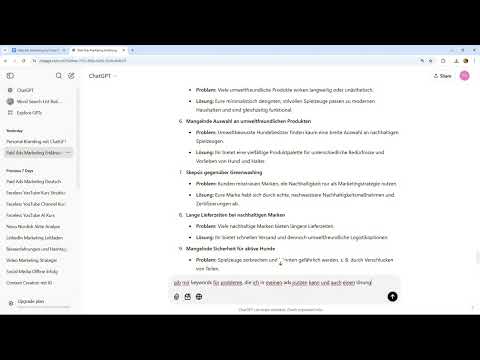
Now ask yourself: What problems does your target audience have that your product can solve? Create a list of these problems by asking such questions. For example, use ChatGPT or other tools to capture specific concerns. Be sure to document the most common and relevant problems.
Step 3: Elucidate Desires
In addition to the problems, the desires of your target audience are equally crucial. Ask yourself what your customers hope for from your product. This could involve aspects like sustainability, safety, or modern design. Again, you can use tools to develop suitable phrases and keywords.

Step 4: Compare Problems and Desires
Once you have created a list of problems and a list of desires, compare the results. Pay attention to recurring themes and words that appear in both the problems and the desires. This will help you choose effective keywords that optimize the messaging of your ads.
Step 5: Create Effective Ad Texts
Now it's about transforming your findings into engaging ad texts. Use the identified keywords and convert them into short, concise ad texts. The focus should be on addressing both problems and desires in one sentence to establish a strong connection with the target audience.

Step 6: Design of Graphics
Use the obtained keywords as a basis for the designof graphics. With appealing images and design elements that represent the identified problems and desires, you can increase the click-through rate of your ads. This visual support should always reflect the core message of your ad texts.
Step 7: Adjustment and Optimization
After you have created your ads, it is important to continuously test and optimize them. Analyze their performance and adjust the texts and graphics based on your target audience's responses. This can involve using A/B testers to achieve the best results.

Summary – Designing Targeted Ads for Your Audience
In this guide, you have learned how to successfully identify the problems and desires of your target audience and translate them into effective ads. Capturing specific keywords is the keyto designing your ads in a compelling and targeted manner.
FAQ
What are the best tools for analyzing the target audience?Tools like Google Analytics, Facebook Audience Insights, and survey tools are well suited for analysis.
How often should I optimize my ads?Regular adjustments, at least once a month, are advisable to enhance performance.
How do I find the best keywords for my ads?Analyze the most common problems and desires of your target audience and use tools like the Google Keyword Planner for assistance.
What is the difference between problems and desires in advertising?Problems are challenges that need to be solved, while desires are the positive outcomes that customers seek.
How can I integrate keywords into my ad text?Use the keywords in the headlines and main text to directly address the concerns of your target audience.


