Imagine the band is playing, the lighting effects bathe the hall in color, and you want to capture the bride and groom dancing without a harsh flash destroying the mood. That is exactly what this guide is for. You will learn how to use the hot-shoe flash so that ambient light and artificial light harmonize and the guests are hardly disturbed.
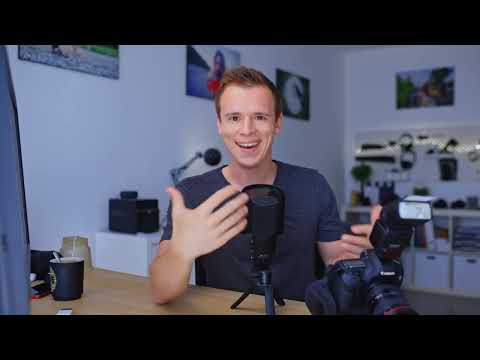
The video is only loaded from YouTube when you play it – data (including your IP address) is then transmitted to YouTube/Google. More in the privacy policy
Key Takeaways
- Only use flash when the camera and ambient light are no longer sufficient.
- Modern sensors handle high ISO values well, and a wide-open aperture helps additionally.
- The flash's AF assist light makes autofocus easier in dark rooms.
- Bouncing the flash indirectly off the ceiling, a wall, or a reflector looks softer than direct flash.
- The camera should first be set so that the background remains visible, and only then is the flash added as fill light from the front.
- A flash exposure compensation of -1 to -2 prevents blown-out subjects, especially bright wedding dresses.
- The second-curtain sync creates dynamic images with light trails in the background when there is movement.
Step 1: Use flash only as a last resort
Start by asking whether you need to use flash at all. The flash is a tool for emergencies and not a default setting. Often the problem is not an ISO value that is too high or a movement that is too fast. Only when you can no longer expose cleanly with your equipment do you reach for the flash. Especially at events, this principle is worthwhile, because an unnecessarily used flash immediately changes the atmosphere.

Step 2: Prepare the camera for low light
Modern cameras still deliver usable results at ISO 3200 or 6400. If you combine this sensitivity with a wide-open aperture, the light in the hall is often already sufficient. So first check how far you can get without flash before you activate the flash unit.

Step 3: Use the flash's AF assist light for autofocus
In very dark rooms, autofocus often can't find a subject. Here the infrared AF assist light of the hot-shoe flash helps. It projects a grid onto your subject so that the camera can detect it much more easily. Note that the assist light only works with single autofocus. Continuous autofocus for moving subjects is not possible with it. Therefore, choose single AF for standing or slowly moving guests and set it to the face.

Step 4: Bounce the flash indirectly
Direct flash quickly looks harsh and flat in wedding photos. Therefore, aim the flash at the ceiling or a light-colored wall so that the light falls on your subject as a large, soft source. However, make sure the ceiling is neutrally colored. If it is colored or very high, such as with a glass ceiling, the flash loses effectiveness or casts an unattractive color tint on the subject. In this case, you have to switch to other techniques.

Step 5: Enlarge the light source with the wide-angle reflector
If no suitable ceiling is available, you can position the flash so that it scatters light through the wide-angle reflector. Tilt the flash head about 45 degrees forward and pull out the reflector. This makes the light surface larger, and the light looks softer. Alternatively, you can attach a diffuser such as a tube-shaped diffuser dome. However, this method is bulky, easily gets caught on things, and delivers somewhat less crisp light.

Step 6: Set the ambient light as the base
Before the flash comes into play, you photograph the scene without flash. Set shutter speed, aperture, and ISO so that the subject is just barely recognizable. The image may well look dark at this point. What matters is that the lighting mood and light effects in the room remain visible.

Step 7: Deliberately expose the background too
Most flash photos fail because the background turns black. The flash only illuminates the subject and ignores the rest. If you set the camera a bit brighter, you bring the light effects, the stage, or the string lights into the picture. The flash then only has to brighten the subject from the front. This produces images that look natural and don't look like a studio shot.

Step 8: Keep the flash power low and use reserves
A flash working at full power takes a long time to recharge and is therefore sluggish. So set the flash to a low power, such as 1/16. That way it recharges faster than it uses energy and can keep firing continuously. The camera should be set bright enough that the flash does not have to provide all of the fill light.

Step 9: Use TTL and set the flash exposure compensation
In TTL mode, the flash emits a short pre-flash before the shot to measure the appropriate power. This happens so quickly that you don't notice it. TTL makes you flexible because you can concentrate on the subject. However, light-colored clothing such as wedding dresses quickly becomes overexposed. So set the flash exposure compensation to -1 or -2. A shot that is too dark can easily be brightened later in image editing, whereas blown-out white cannot.

Step 10: Choose aperture, shutter speed, and ISO appropriately
The aperture depends on the lens and the distance to the subject. With a lens of f/1.4 or f/1.8, you can use the widest aperture. With a 35 mm lens, a somewhat smaller aperture is recommended, for example f/2.8, so that the depth of field is sufficient. For shutter speed, the following applies: between 1/20 and 1/80 of a second you will usually find the right mix of subject and background. You then adjust the ISO so that the background remains visible and the image doesn't look too dark.

Step 11: Manual flash at a constant distance
At parties or receptions, you often move at a similar distance from your subjects. In this case, you can also set the flash manually. The flash then mainly hits the subject and less of the background. This saves time because you don't have to constantly readjust, and delivers consistent results.

Step 12: Use the second-curtain sync for motion
Normally, the flash fires on the first shutter curtain, that is, at the start of the exposure. With long exposure times, the subject then looks frozen, while moving backgrounds only trail behind like a veil afterward. If you set the flash to the second shutter curtain, it fires just before the shutter closes. This creates motion streaks in front of the subject, and the movement looks more dynamic. Try exposure times between 1/10 and 1/20 of a second and adjust them to the pace of the scene.


In summary: first adjust the camera to the ambient light, then use the flash deliberately as a soft fill light. That way the mood is preserved, and the guests are not constantly being hit by flashes.
Summary ??? Using flash at weddings and events: preserve the light, spare the guests
Those who use flash discreetly at weddings and events preserve the atmosphere of the room. The decisive factors are the combination of ambient light and flash, indirect direction of the light, moderate flash power, and the appropriate flash exposure compensation. With the second shutter curtain and deliberate motion blur, you can also achieve dynamic images.
FAQ
Why shouldn't I use flash right away?An immediate flash destroys the lighting mood and disturbs the guests. Modern cameras cope well with high ISO values, so it is worth testing without flash first.
What does the flash's assist light do?The assist light projects an infrared grid onto the subject so that the autofocus can work precisely in dark rooms. However, it only works in single autofocus.
When does bounce flash make sense?Bouncing the flash off the ceiling or a wall creates soft light. The prerequisite is a neutrally colored, not too high surface that reflects the light back.
Why should I reduce the flash exposure compensation?Light-colored clothing, such as a wedding dress, is quickly overexposed by the flash. With a compensation of -1 or -2, details are preserved, and the brightening can be done later on the computer.
What do I need to keep in mind with the second shutter curtain?The flash then fires at the end of the exposure. This creates motion streaks behind the subject. Use longer exposure times for this and test the effect on moving scenes.


