
Writing a bachelor's/master's thesis and optimizing it with AI

Academic Writing: From the Research Question to the Master's/Bachelor's Thesis - Artificial Intelligence (KI / AI)
33 Videos, 243 minutes
1 - Introduction of Dominique
1 minDominique Zeise introduces herself. She is a research associate in the field of bioinformatics/biosystems engineering. Her focus areas: AI, digitalization, and how to use these topics profitably.
2 - Introducing Markus
1 minThis is Markus Quanz, a mechanical engineering student and research associate. He provides insights into his academic career (Bachelor's, Master's) and his experiences with project work and Master's theses.
3 - AI for Theses: An Introduction
6 minWhat is artificial intelligence and how can it be used in academic papers? A basic introduction that briefly explains the types of AI and their possible applications.
4 - Benefits of Using AI in Scientific Papers
7 minDiscover the great benefits: AI increases efficiency, improves data accuracy, and opens up new, innovative approaches for your research.
5 - Ethical and legal aspects of AI in science
8 minThe flip side of the coin! This video sheds light on important topics such as bias, fairness, transparency, and responsibility in the use of AI tools.
6 - What is a thesis?
2 minAn academic examination at the end of one's studies (Bachelor/Master). Goal: to work on a topic independently and to answer a scientific research question.
7 - Structure of Theses
11 minA clear structure is half the battle. This video shows the perfect layout, from the introduction through the methodology and results to the finished bibliography.
8 - Types of Theses
8 minAn overview of the literature-based works (theory and overview) and empirical works (experiments, original data), so that you can choose the right method for your topic.
9 - Finding Topics for Theses
12 minFind your perfect topic! Tips on how to propose topics (your own interests, student assistant work) or how to approach a given topic from the university/industry in the best possible way.
10 - University vs. Industry (Thesis)
13 minA comparison of worlds! University offers freedom and expert knowledge, industry has a stronger practical focus and often dictates the topics. Important: Always work scientifically!
11 - Experience Report: Thesis at the University
4 minA look behind the scenes. Markus reports on his master's thesis at university. He talks about finding a topic, resources (labs, PCs) and supervision.
12 - Experience Report: Thesis in Industry
6 minA practical check. Here you will learn how a thesis works in an industrial environment. It covers topic selection, practical relevance, and the transfer of research into the company.
13 - Create schedule
13 minA good schedule is essential for your thesis. Here you will learn how to optimally plan the typical phases – topic selection, literature research, writing – and minimize stress.
14 - Definition of Plagiarism
9 minWhat is plagiarism and how do you avoid it? Learn the difference between direct and indirect quotations and how to make your work legally safe.
15 - Communication with the supervisor
5 minProper communication with your supervisor is the key to success. Tips for regular meetings, how to accept critical suggestions, and how to mark corrections correctly.
16 - Approach to Literature Research
6 minThe detective's guide for your thesis. Learn how to use search engines and databases like IEEE or Google Scholar effectively to quickly find suitable, citable literature.
17 - What is a good literature source?
12 minYou are what you cite! This video explains the peer review process and the types of sources (monographs, journal articles), so that your work stands on scientifically sound ground.
18 - Organization of Literature Sources
12 minSay goodbye to paper slip chaos! Here you'll get to know the most important reference management programs (like Zotero) to automatically sort your sources and create your bibliography.
20 - Automatic Literature Research with AI
15 minLet AI work for you! Discover tools like elicit.com and scispace.com. They help you quickly summarize scientific papers and find relevant studies.
21 - Planning Experiments with AI Support
5 minHow AI helps you design the perfect experiment! Learn to formulate research questions, identify the most important variables, and set up the experimental design like a pro.
22 - Note Management: AI-Powered Strategies
11 minNo more note chaos! Discover how to use AI tools to cleverly organize and link your notes (including voice recordings!) so you can keep track of everything while writing your paper.
23 - Efficient Summaries and PDF Queries
4 minLet AI read the hefty tomes! Learn how to use special AI tools to query scientific PDFs and efficiently summarize long documents. Time savings: epic.
24 - Automated Data Collection & Processing
3 minNo more manual data entry! Learn how AI software automatically collects, structures, and processes data. This greatly speeds up your research.
25 - Improving data quality through AI technologies
6 minQuality is king! Learn how AI tools detect and correct faulty or incomplete data. This makes your data foundation reliable and clean.
26 - Data Analysis – Choosing the Right Charts
16 minChoose the right visual for your data story! The video shows when you should use bar, line, or pie charts for your data visualization – so that everyone understands your results.
27 - Word vs. LaTeX
5 minThe great formatting showdown! Learn which software comes out on top for your academic work. Word is easier, LaTeX is the professional standard for complex formulas and perfect visuals.
30 - Text optimization and critical questioning
5 minAI as your editing assistant! Improve your writing style, find the best synonyms, and learn how to critically review AI-generated texts – because trust is good, but control is better.
32 - Structure of Presentations
8 minThe perfect common thread for your presentation! Learn the classic structure (introduction, main body, conclusion) and how to strategically prepare backup slides for the tricky questions.
33 - Tools for Presentations
3 minHere you will learn how to prepare for your defense (20 minutes + discussion). It covers timing guidelines (1-2 min/slide), how to test the technology, and how to best adapt to the expert audience.
34 - Tools for Presentations
3 minPowerPoint, LaTeX or maybe Canva after all? We'll show you the right tools for your academic presentation – and why you should always have a PDF backup copy ready.
35 - Common Mistakes in Presentations
7 minForget reading from notes and unsuitable clothing! This video covers the most common mistakes (slide overkill, poor legibility) and helps you perform confidently and flawlessly.
36 - Summary of the Key Findings of the Course
4 minThe perfect conclusion! A turbo recap of the core topics: from the fundamentals of automation to the creation of AI agents and their strategic integration into everyday work.
37 - Common Mistakes in Theses
11 minLearn from the mistakes of others (it's cheaper)! We'll show you the biggest pitfalls in academic papers – schedule, quality, citing – so that your paper is guaranteed not to be a flop.
You might also like

From Context Hints to Conversion: Campaigns in ChatGPT

Have websites, automations, and image editing done by AI – completely without code
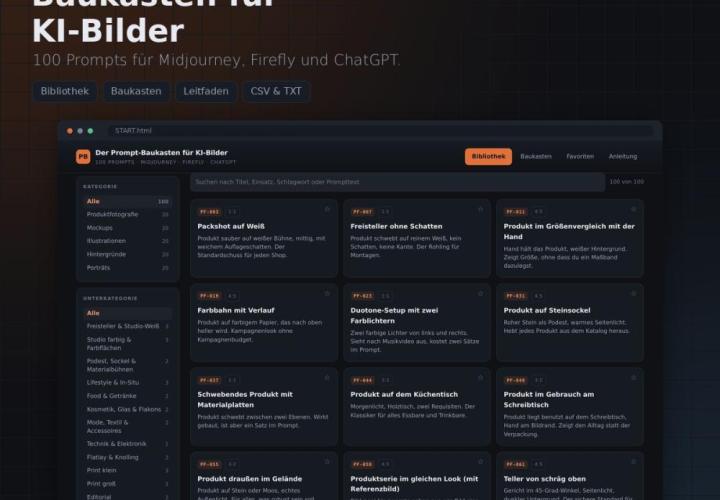
For Midjourney, Adobe Firefly and ChatGPT

From log analysis to incident report: ChatGPT, Claude, Gemini & local models in everyday security
Comment now „Writing a bachelor's/master's thesis and optimizing it with AI“