
Imagine someone wakes up in the morning with a pulling feeling in their lower back and thinks: That will surely go away soon. This is exactly the point where it is decided whether your advertising reaches this person or passes them by. Before you think about ad copy, offers or prices, you need to know how consciously your customer actually perceives their need.
The video is only loaded from YouTube when you play it – data (including your IP address) is then transmitted to YouTube/Google. More in the privacy policy
In this guide, you will learn about the different awareness levels of your customers. You will find out how to align content with these levels, and you will look at the mistake many advertisers make on Facebook and Google Ads. The basics are quickly explained, but their impact on your campaigns is all the greater.
Key Takeaways
- The awareness levels describe how much your customer knows about their problem and about your solution. They say nothing about the quality of your offer.
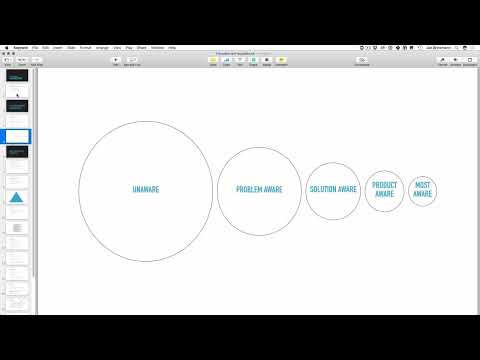
- The largest group is right at the beginning: people who do not yet recognize their problem as a problem ("Unaware" level).
- On Google, you mainly reach people who are already searching. These are usually the "Problem Aware", "Solution Aware" and "Product Aware" levels.
- "Most Aware" customers already know you and mainly need clear information on price and terms.
- The level determines which message, which format and which channel you choose. An ad for Most Aware customers rarely works on Unaware people.
Step-by-Step Guide
Step 1: Understanding the "Unaware" Level
Start with the first level. A person in this phase has a problem but does not recognize it as such. Typical is the back pain that supposedly will be gone again tomorrow. The person neither knows exactly where the problem comes from, nor that there is a solution for it. For you, this means: The largest audience is here, but you do not reach these people through a search query, because they never search for a solution. You have to make their problem visible before they even develop an interest in a provider.

Step 2: Recognizing the "Problem Aware" Level
In the next step, the customer knows that something is wrong. They tell themselves: My back is tense, maybe a vertebra is blocked. They know their problem by name, but do not yet know that there is a professional solution for it. Your task is to name symptoms, explain causes and adopt the language of those affected. Such people often search for terms like "tense back cause". That is exactly why they are visible on Google as soon as you target the matching search terms.
Step 3: Serving the "Solution Aware" Level
Now the customer knows the desired result. They want a flexible, pain-free back and are looking for ways to get there, such as physiotherapy, chiropractic or massage. However, they do not yet know that your offer in particular delivers this solution. Your goal at this level is therefore: Show that your service exists as a path to the solution, and explain clearly how it works and what benefits it brings.
Step 4: Convincing the "Product Aware" Level
At this level, the prospect already knows you as a provider, but is still unsure whether you are the right choice. They compare, read reviews and wonder whether you really fit their problem. Trust signals such as references, testimonials, clear service descriptions and a comprehensible differentiation from other providers help here. In Google Ads, ads that mention your name or brand as well as your specific service promise are suitable.
Step 5: Targeting the "Most Aware" Level Specifically
The last level concerns people who know you, trust you and only want to know whether the offer is worthwhile for them. The customer essentially asks themselves: Is the price interesting for me, or is it beyond what is feasible for me? Your message has to become concrete at this level. Name prices, dates, discounts or a clear call to action. Long explanations of the problem hardly help here anymore, because this customer has long known the problem.
Step 6: Thinking Reach and Levels Together
Now comes the most important connection: You win most new customers not at the "Most Aware" level, but among the Unaware people, because that is where the largest audience is. The typical mistake of many advertisers is to show the same sales message to everyone. This causes campaigns to fall flat. For each target group, think about which level it is at, and adapt content, tone and offer accordingly. On Facebook, for example, you can address people with matching interests who have never searched for a solution.
Step 7: Align Search Campaigns with the Right Stages
With Google Ads, you only reach people who are already actively searching. These are usually the "Problem Aware" and "Solution Aware" stages, as well as users who are already specifically searching for your provider. These stages therefore form the focus of your search campaigns. Make sure that search terms, ad copy, and landing page match the respective stage. Anyone searching for a cause expects an explanation and not a price.
Step 8: Answer Price Questions at the "Most Aware" Stage
Finally, you check whether your campaigns answer the customers' open questions. At the "Most Aware" stage, the main question is about price. Is it affordable for the customer, or does it seem unattainable? Clarify this question transparently on your website and in your ads, for example through price information, package overviews, or installment payments. This removes the uncertainty from prospects that still makes them hesitate shortly before closing the deal.
Summary – Understanding Customer Awareness: The Five Awareness Stages for Your Advertising
The five awareness stages show you how much your customer knows about their problem and your solution. You reach Unaware people with content that makes their problem visible. You address Problem Aware and Solution Aware people with explanations and solution paths. You convince Product Aware people with trust and clear differentiation. Most Aware customers need concrete offers, prices, and a clear next step. If you align your campaigns with these stages, you waste less budget and reach people where they actually stand.
FAQ
Question: What does the term Unaware mean?Answer: Unaware describes people who have a problem but do not recognize it as such and do not know that a solution exists.
Question: How do Problem Aware and Solution Aware differ?Answer: Problem Aware people know their problem but are still searching for causes. Solution Aware people know what result they want and are searching for the way to get there.
Question: Why can't I reach Unaware customers via Google?Answer: These people are not actively searching for a solution because they do not perceive their problem as such. That is why they are hardly visible in search campaigns.
Question: How do I know that my ad is addressing the wrong stage?Answer: If prospects click on your ad but immediately bounce, the message often does not match the customer's stage. Check whether you are showing prices or offers even though the customer does not yet know the problem.
Question: Which stage brings the most new customers?Answer: The greatest potential usually lies with Unaware people, because that is where the largest audience is. The art lies in picking them up with suitable content.


