
Programming with Python - the beginners' course

- 66 lessons in over nine hours of video training on programming with Python
- Learn the theoretical basics of software development
- Apply your newly acquired knowledge directly to practical examples
- From programming artist and professional trainer Denis Panjuta
From a blank screen to your own program - enter the world of strings, operators, classes and methods so that your code leads to the right result line by line.
66 Videos, 592 minutes
Course Overview
Python Programming for Beginners - 01 Course Introduction
5 minIn this video you will get a short introduction to the contents of this course.
Python Programming for Beginners - 02 How to use this course most effectively
4 minHere we show you what you need to bear in mind when implementing the course in order to use it as successfully as possible.
Python Installation
Python programming for beginners - 03 Python installation
7 minThe necessary software is installed here.
Python programming for beginners - 04 Selecting the development environment
10 minThe various development environments are discussed and it is shown which ones we will use.
Python data structures
Python programming for beginners - 05 Numbers and variables in Python
9 minIn this part of the course, we will look at how numbers and variables work in Python.
Python programming for beginners - 06 Mathematical operators in Python
10 minIn this part of the Python course, we will look at mathematical operators in Python. We have already seen the first simple calculations in the last part. Now we will look at some more examples.
Python programming for beginners - 07 Strings
5 minIn this part of the course, we will look at strings in Python.
Python programming for beginners - 08 Properties and formatting of strings
12 minIn this part of the course, we will look at strings in Python.
Python programming for beginners - 09 Formatting strings extended
8 minMore information on formatting strings.
Python programming for beginners - 10 lists
14 minIn this article, we will look at lists in Python.
Python programming for beginners - 11 sets
7 minIn this article, we take a look at sets. These are data types.
Python programming for beginners - 12 tuples
11 minIn this tutorial, we will look at another data type: a tuple.
Python programming for beginners - 13 dictionaries
15 minIn this article, we will discuss dictionaries. This is a data type that allows us to "map", i.e. to assign two values in a similar way to lists.
Python programming for beginners - 14 Booleans and logical operators
8 minIn this article, we will look at booleans and logical operators in Python.
Instructions and loops
Python programming for beginners - 15 If, Elif and Else statements
13 minIn this article, you will learn one of the most important concepts in programming - the If statement.
Python programming for beginners - 16 For loops
10 minIn this article, we will look at for loops in Python. This is called "For Loop" and it is a powerful way to save a lot of repetitive work.
Python programming for beginners - 17 While loops
14 minNow that we've seen for loops, it's time to learn about while loops in Python. While loops (or "while loops") are the easiest way to repeat something multiple times. They are loops because the code is run over and over again until the condition is met.
Python programming for beginners - 18 While loops: Challenge
6 minWhile loops: Challenge - highest common denominator.
Python programming for beginners - 19 Range function
6 minThis article is about the range() function in Python. This is quite useful if you want to create a series of numbers or even a list. It saves you an enormous amount of work if you want to work with for loops. Incidentally, range comes from English and means range.
Python programming for beginners - 20 exception handling with Try, Except, Else, Finally
11 minIn this lesson, we will look at exception handling in Python. To do this, we will look at the terms Try, Except, Else and Finally.
Functions and modules
Python programming for beginners - 21 functions
4 minIn this article, we will look at functions in Python. This is a component that is extremely important. Functions allow us to prepare a specific code and then call it at any time.
Python programming for beginners - 22 functions with parameters
12 minIn the last article we learned about simple functions, in this one we will look at functions with parameters in Python.
Python programming for beginners - 23 User input
10 minUntil now, we have never asked the user of our program to enter anything. This is exactly what we are changing in this article.
Python programming for beginners - 24 modules and packages
7 minSo far, we have almost exclusively written our code ourselves, but now we are learning about the modules and packages in Python. These allow us to use code that we don't have to write ourselves. This saves us a huge amount of time and allows us to use functions that enable us to implement complex tasks using fewer lines of code.
Python programming for beginners - 25 Create your own modules in Python
5 minIn the last article, we saw how we can import modules into Python. Now it's time to see how we can create our own modules.
Python programming for beginners - 26 The random module
5 minThe random module allows us to obtain a random number. This allows us to control many events randomly.
Python programming for beginners - 27 Exercise: Black Jack (Intro)
4 minIn this exercise we program the game Black Jack.
Python programming for beginners - 28 Exercise: Black Jack (solution)
41 minIn this video, the solution to the exercise for the game of blackjack is worked out.
Working with files
Python programming for beginners - 29 Open and read files
6 minIn this article, you will learn how to open and read files in Python.
Python programming for beginners - Writing 30 files
6 minIn this article, you will learn how to write to a file using Python.
Regular Expressions
Python programming for beginners - 31 Regular Expressions: re.match & re.search
12 minThe term "regular expression" comes from the theory of automata and the theory of formal languages, two areas of theoretical computer science.
Python programming for beginners - 32 Regular Expressions: re.findall and split
10 minIn this article, we will take a further look at regex. We will look at the re.findall and split functions.
Object Oriented Programming Basics
Python programming for beginners - 33 Object-oriented programming
6 minIn this article, you will learn the basics of object-oriented programming in Python (OOP).
Python programming for beginners - 34 classes
9 minIn this article, you will learn how classes are structured in Python and what they do. In the last article, you saw what objects are and how objects basically work. Now you will learn how classes are related to objects.
Python programming for beginners - 35 classes and methods
15 minIn this article, you will learn about the methods in Python. These are actions that our class can perform. We have already seen how attributes work. Now let's take a look at the methods and see how we can finally get our car to drive ;)
Python programming for beginners - 36 Inheritance
12 minThis article is about the concept of inheritance in Python. In programming, this concept makes it possible to create classes that inherit from other classes - and therefore inherit all their attributes and methods.
Built-in functions
Python programming for beginners - 37 Lambda operator
10 minIn this article, you will learn about and understand the lambda operator in Python. Lambda is a concept that many beginners find very difficult. That's why I'm breaking down the individual steps slowly so that it's easy to understand.
Python programming for beginners - 38 filters
8 minIn this article, you will learn about the Filter function in Python.
Python programming for beginners - 39 Zip function
5 minIn this article, you will learn how the zip function works. This is useful, for example, to combine two lists into one list consisting of tuples, or to merge dictionaries content and return tuples.
Python programming for beginners - 40 map function
6 minIn this article, you will learn about the map function in Python. The map function takes a function as the first argument and a sequence (e.g. list) as the second. The map function then applies the function to all elements of the sequence and then writes the results to a list.
Python programming for beginners - 41 Enumerate function
3 minIn this article, you will learn about the enumerate function. This is a function that allows us to run through a sequence.
Python programming for beginners - 42 prime numbers: Exercise
8 minIn this exercise we determine the prime numbers we are looking for.
Python programming for beginners - 43 all() & any() methods
5 minIn this article, you will learn how the all() and any() methods work in Python.
Decorators
Python programming for beginners - 44 *args and **kwargs in Python
9 minThis video deals with functions with a previously undefined set of arguments.
Python programming for beginners - 45 decorators
18 minThis article is about decorators in Python, how they work and what they do.
Advanced objects and data structures
Python programming for beginners - 46 Working with numbers
5 minWe have already discussed numbers in a previous part of the course. In this article, we will get to know even more methods that are helpful in connection with numbers.
Python programming for beginners - 47 methods of strings
7 minIn this article you will learn different methods of strings in Python.
Python programming for beginners - 48 lists and their methods
9 minIn this article, you will get to know some of the list methods. We have already seen some of them, but let's take another look at the most important ones in connection with lists.
Python programming for beginners - 49 Exercise: Queue
8 minHere we create a small program that processes a queue.
Python programming for beginners - 50 sets and their methods
10 minThis article is about sets and their methods in Python.
Python programming for beginners - 51 More about Dictionaries
6 minWe have already seen most of the information on dictionaries in previous articles. However, here we expand the list of methods a little.
Advanced modules in Python
Python programming for beginners - 52 Datetime
12 minIn this article, you will learn how to use time with Datetime in Python. Datetime is a module that displays and saves the time.
Python programming for beginners - 53 namedTuple
4 minIn this article, you will learn about and understand the namedTuple in Python.
Python programming for beginners - 54 OrderedDict
4 minIn this article, I'll show you how OrderedDict works in Python and what it's good for. You have already seen how dictionaries work. The fact is that dictionaries are not interested in whether they are ordered or not - or rather, they don't care in which order they are filled. "Ordered dictionaries, on the other hand, pay attention to what was inserted and when.
Python programming for beginners - 55 DefaultDict
4 minIn this part of the Python course, you will learn about DefaultDict in Python. We have already seen default dictionaries and realized that a dictionary consists of two important components: a key and a value. However, if we want a dictionary to be assigned a specific default value when we don't explicitly assign one to it, we can do this using DefaultDict.
Python programming for beginners - 56 counters
8 minThis article is about counters in Python. A counter is a container that keeps track of how often the same value is added. It can be used to implement the same algorithms as bag or multiset data structures in other programming languages.
Python programming for beginners - 57 Python debugger
6 minThe Python debugger allows us to debug our code, i.e. to find errors more easily than with a print statement, for example.
GUI - user interface
Python programming for beginners - 58 GUI: Introduction
9 minIn this article, we will take a look at how to use a GUI (Graphical User Interface) in Python. There are several ways to do this in Python, but we will work with tkinter.
Python programming for beginners - 59 Arrange layout
6 minIn this article, you will learn how to arrange the layout with tkinter in Python. To do this, we will take the code from the last article and extend it a little.
Python programming for beginners - 60 buttons to use and clicks
7 minIn this article, you will learn how to use buttons in Python. You will see how to create them in a GUI and assign a function to them.
Python programming for beginners - 61 Input fields with Entry
11 minIn this article, you will learn how input fields work with Entry. To do this, we will see how we can customize our GUI (user interface) so that the user can enter their name and age.
Python programming for beginners - 62 Using images
5 minIn this rather short article you will learn how to add images to the GUI (user interface) in Python.
Python programming for beginners - 63 The Tkinter Grid Geometry Manager
13 minIn this article, you will learn what the "Grid Geometry Manager" is all about and how you can use it to cleanly design your user interface. It is a tool that allows us to arrange our widgets (elements) in a two-dimensional table. To do this, everything is divided into rows and columns.
Python programming for beginners - 64 Creating a menu bar and drop-down menu
11 minAs soon as you develop a more extensive program, you may need a menu bar at some point. You are probably familiar with this from most programs you have worked with so far. Now it's time to see how you can create and use such a menu bar in Python yourself. To do this, we will first create the menu itself.
Python programming for beginners - 65 Canvas in the GUI
16 minIn this article, you will learn how to work with the canvas in the GUI. To do this, we will create a small program in which a circle is displayed on the canvas. Canvas comes from the English language and can be translated as "canvas". In other words, you draw something on the canvas.
Python programming for beginners - 66 exercises on GUI and Canvas
9 minIn this exercise, we extend the code from the last video and perform random operations.
You might also like
Step by step to your own functional forms
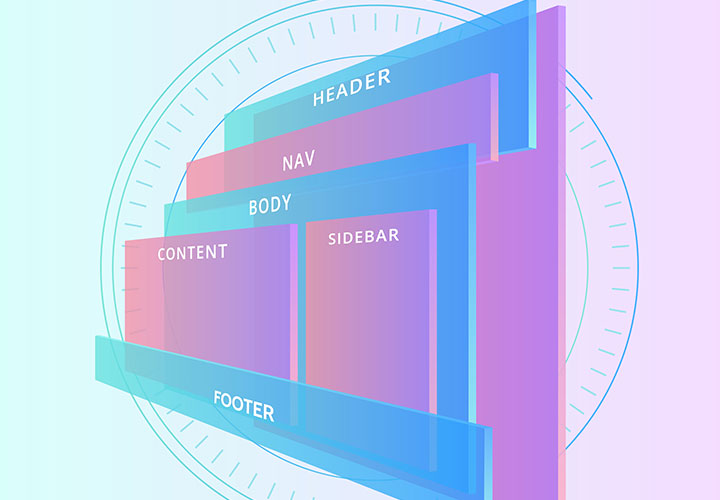
For modern websites & apps

How your websites & apps speak like ChatGPT
For error-free, fast websites with optimized layouts
Comment now „Programming with Python - the beginners' course“